About NewSpace
The space race has evolved. Private sector space exploration and technology efforts are now joining and leading the way.
To advance space access and exploration further, academic and commercial space enterprises must leverage value-added expertise, facilities, and focus to drive the future of this industry. The ASU Space Technology and Science (NewSpace) Initiative is creating academic-commercial partnerships that brings together the most brilliant minds in the space industry sector for an unprecedented collaborative effort. ASU NewSpace leads the integration of academic and commercial space enterprises using ASU’s core strengths in space science, engineering, and education.
Explore
We actively explore the NewSpace sector and identify opportunities for collaboration with industry leading companies to. Our combined resources create long-term, lasting progress that drives discovery.
Lead
Establishing mutual engineering, business and scientific goals is critical. We lead this process by creating solid relationships between NewSpace companies and ASU’s skilled researchers and staff.
Innovate
ASU takes the existing strengths and talents of researchers from a wide array of disciplines and leverages them to create innovative research partnerships within the emerging NewSpace sector.
Mission
The ASU Space Technology and Science (NewSpace) Initiative establishes and fosters partnerships between ASU and next-generation non-governmental space exploration science and technology companies (the NewSpace sector). We enable the discovery of new research avenues, new partnerships, and new opportunities for student engagement.
How to work with NewSpace
Without collaboration there is no advancement. We actively seek new and interesting connections that will further the academic-commercial space science partnership. ASU can collaborate on a variety of project types and phases in a vast array of areas:

The diversity of space studies at ASU
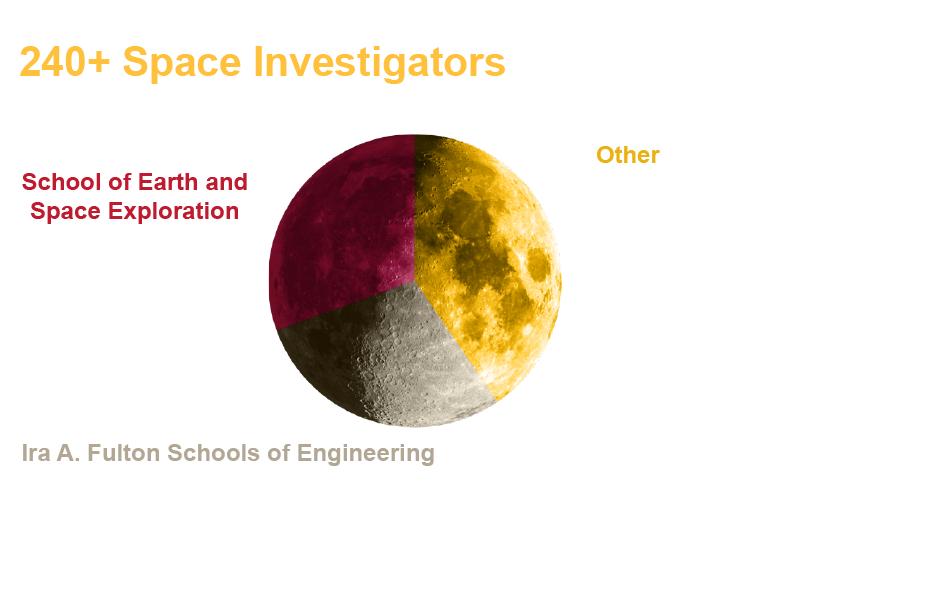
ASU is world-renowned for heading up major NASA technology, robotics, and planetary/astronomy science investigations and missions. At ASU, the study of space, the planets and the origins of life involves expertise spread across many academic units, including the School of Earth and Space Exploration and the School of Life Sciences. ASU has developed a strong multidisciplinary faculty, incorporating astronomers, geologists, engineers, physicists, microbiologists, cell biologists, tissue engineers, immunologists, vaccinologists and other researchers to create a superior research environment.
Affiliations

Biographies
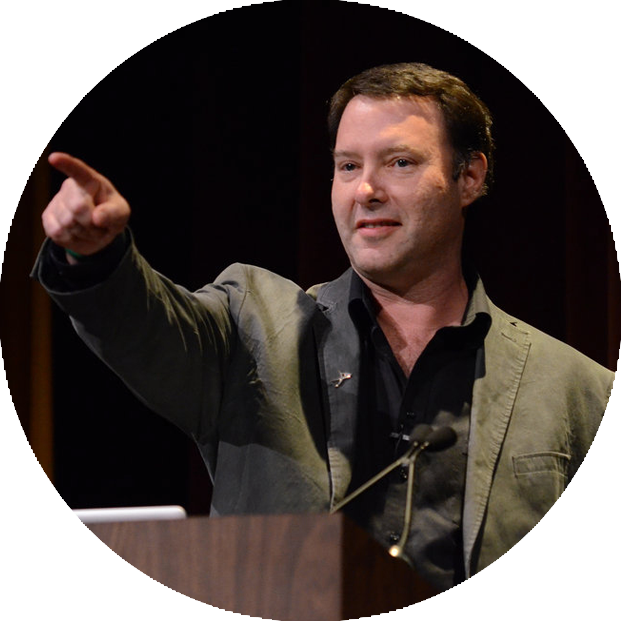
James Bell, PhD
Director, NewSpace Initiative | Professor, School of Earth and Space Exploration
Jim Bell is a professor in the School of Earth and Space Exploration at Arizona State University in Tempe, Arizona, an adjunct professor in the Department of Astronomy at Cornell University in Ithaca, New York and President of the Planetary Society. He received his BS in planetary science and aeronautics from Caltech in 1987 and his MS and PhD in geology and geophysics from the University of Hawaii in 1992. Jim spent three years as a National Research Council postdoctoral research fellow at NASA’s Ames Research Center from 1992 through 1995.
Jim is an active planetary scientist and has been heavily involved in many NASA robotic space exploration missions, including the Near Earth Asteroid Rendezvous, Mars Pathfinder, Comet Nucleus Tour, Mars Exploration Rovers Spirit and Opportunity, Mars Odyssey Orbiter, Mars Reconnaissance Orbiter, Lunar Reconnaissance Orbiter, and the Mars Science Laboratory Curiosity rover mission. Jim is the lead scientist in charge of the Panoramic camera color, stereoscopic imaging system on the Spirit and Opportunity rovers, the deputy principal investigator of the Mastcam camera system on the Curiosity rover, PI of the Mastcam-Z cameras on NASA’s upcoming Mars-2020 rover, and deputy PI of NASA’s Psyche mission.

Craig Hardgrove, PhD
Director of Projects, NewSpace Initiative | Assistant Professor, School of Earth and Space Exploration
Craig is a planetary scientist whose research focuses primarily on spectroscopy of planetary surfaces. Craig received a PhD in planetary science in 2011 from the University of Tennessee and a BS in physics in 2004 from Georgia Tech. Currently he is the principal investigator of the Lunar Polar Hydrogen (LunaH) Mapper mission. He has worked both operations and science for the Curiosity, Spirit, and Opportunity rovers, as well as the Mars Reconnaissance Orbiter. For Curiosity, Craig is a representative of Geology-Mineralogy Science Theme Group, and a member of both the color camera and neutron detector teams. Craig has served on review panels for NASA proposals as well as a reviewer for a variety of planetary science journals. He has taught undergraduate and graduate courses on planetary science and has organized several public outreach activities. Craig has also served as a writing associate for the New York Academy of Sciences and as a consultant for the National Academy of Sciences: Science and Entertainment Exchange, and is actively involved in scientific outreach through podcasting.

Jim Rice, PhD
Associate Director Science and Research, NewSpace Initiative
Jim is an astrogeologist with over 30 years research experience specializing in the exploration of the solar system, especially the Moon and Mars. Rice has also trained and briefed NASA astronauts in geology and Mars exploration. Rice was the geology team leader on the NASA Mars Exploration Rover Project (Spirit and Opportunity). He was the associate project scientist on the Lunar Reconnaissance Orbiter Project. He also has NASA mission experience working on the Mars Odyssey Orbiter. Rice has also served on numerous NASA Science Analysis Groups for manned missions back to the Moon and Mars. Rice will be supporting proposal development from ASU faculty the with commercial space industry.

Scott Smas
Associate Director, NewSpace Initiative
Scott cultivates corporate and faculty relationships with the commercial space industry for collaborations for federal research funding opportunities, student engagements, and access to facilities. Scott manages the ASU/NewSpace program to support the development of federal research funding proposal submissions with faculty and the commercial space industry. Through these involvements, he has served as an intermediary between university and commercial testing facilities and academic research personnel. As one of the ASU representatives to the Commercial Spaceflight Federation, Scott also actively supports ASU’s involvement in industry events and meetings by promoting the university’s involvement in space missions, research, and other areas.
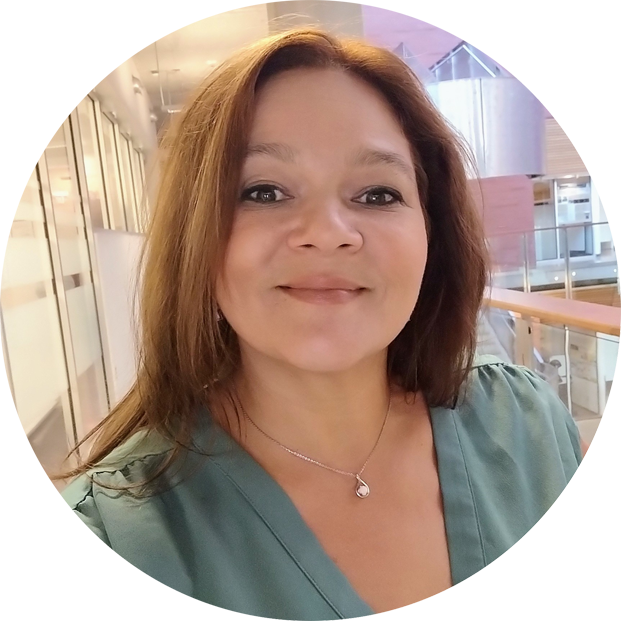
Tiffanny Rauch
Administrative Assistant, NewSpace Initiative
Tiffanny supports the ASU NewSpace team and program logistics, as well as meetings and events coordination. She additionally supports ASU’s MILO Institute as needed with meeting and event activities.

Jonathan Roll
Research and Management Analyst, NewSpace Initiative
Jonathan is a space industry analyst for ASU/NewSpace and a research scholar under a Minerva Research Initiative grant led by ASU faculty. He received his Master’s of Technology & Science Policy from ASU in 2022 and his BA in international politics from George Mason University in 2009. His research has often focused on the interface of geopolitics, stewardship of emerging technologies and the commercialization of the space domain. Additionally, Jonathan actively supports cross-sectoral partnership and innovation by leading the state chapter of the Space Force Association and co-leading the Arizona Technology Council’s Ambassador Committee.

Desmond Wysenyuy
Research and Management Analyst, Milo Space Science Institute/School of Earth and Space Exploration
Desmond is a satcom engineer with eight+ years of professional experience working for the United Nations. He currently serves as a management and research analyst at the Milo Space Science Institute/School of Earth and Space Exploration. In addition, he is pursuing a master’s degree at Arizona State University’s Thunderbird School of Global Management.